 VapeWholesaleHub
Almond Ice Quality Control: Tests We Run Before Dispatch — Entry-Level Price Points
Buyers often ask us to explain why two almond ice samples that look identical behave differently after a month. The answer is almost always tolerance control, and it is more interesting than it sounds.

Positioning Almond Ice on Your Shelf
Before anything else, decide which customer you are buying almond ice for. A convenience counter with limited shelf depth needs a tight range that turns quickly, while a specialist shop can carry a deeper ladder of options and educate buyers into higher ticket lines.
Range decisions for almond ice should start from shelf space, not from a supplier catalogue. Count the facings you actually have, then decide how many of them this line deserves against what it currently earns.
Inspection Before Dispatch
Inspection is only useful if the result is recorded somewhere you can find it later. A almond ice batch log with weights, codes and measurements turns a future complaint into a five minute lookup.
Random checks are fine, but weight the sample towards the start and end of a almond ice production run. Those are where a line is most likely to drift.
- Keep sealed retained samples from every production batch.
- Start with a mixed carton and let your own sell-through decide.
- Write the complaint threshold into the order terms.
- Agree the tolerance band in writing before approving artwork.
- Model landed cost, not ex-works price, when comparing quotes.
Where Demand Is Heading
The most durable almond ice lines over the last few years have been unglamorous and consistent. Novelty sells once; reliability sells every month.
One shift worth planning for: shorter almond ice reorder cycles with smaller average drops. It favours suppliers with flexible production slots over those who only want large annual commitments.
What to Fix Before Approving Almond Ice
Revisit the almond ice specification after every third order. Small improvements compound, and factories take a buyer more seriously when the document has clearly been used.
Good almond ice specs describe the failure boundaries, not just the target. Stating what is unacceptable gives the factory a clear production window instead of a single point they will miss half the time.
| Product category | Refillable kit |
|---|---|
| Resistance band | 0.8 - 1.0 ohm |
| Capacity tolerance | +/- 3% |
| Puff count method | Declared by capacity |
| Master carton | 100 units |
| Carton weight | 4.2 kg |
| Shelf life | 18 months |
| Storage | 15-25 C, dry, away from direct light |
Freight, Customs and Timing
Freight is the hidden half of almond ice unit economics. A denser master carton can save more per unit than a hard negotiation on factory price, because the saving repeats on every reorder rather than once.
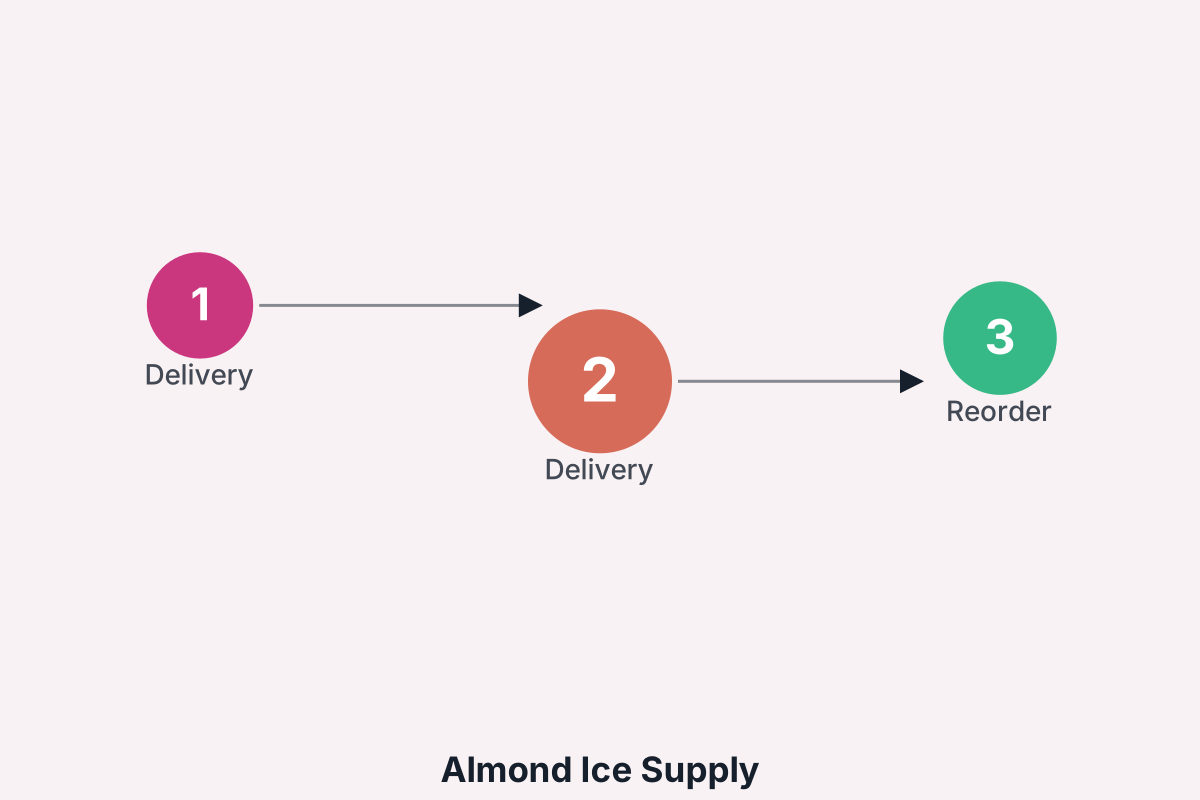
Turning Almond Ice Into Repeats
Keep the almond ice range tidy. A half empty shelf reads as a dying line, and customers interpret it that way faster than any signage can correct.
Practical Checklist
- Ask how the factory measures puff count, then compare like with like.
- Rotate stock by batch code rather than by delivery date.
- Start with a mixed carton and let your own sell-through decide.
- Agree the tolerance band in writing before approving artwork.
- Keep sealed retained samples from every production batch.
- Check carton dimensions against your freight quote before confirming.
Frequently Asked Questions
What happens if my market changes its rules?
Regulations move, and packaging or documentation sometimes has to follow. We keep approved artwork files on hand so that a required change is a reprint rather than a redesign, which keeps the cost and delay down.
Do you hold stock for regular customers?
For established programmes we can reserve production slots and, in some cases, hold finished almond ice stock against a forecast. It removes most of the lead time risk from a reorder and is worth discussing once volumes are stable.
What does a sample pack usually include?
A typical almond ice sample pack covers the strengths or variants you are most likely to list, packed so you can evaluate them side by side. Tell us which lines you are considering and we will match the pack to that rather than sending a generic selection.
Is there support for in-store material?
Yes. Shelf talkers, counter cards and simple planogram suggestions are available for almond ice ranges that reach a sensible volume. Most retailers find the plain strength and flavour cards do the most work.
What information do you need to quote?
Target specification, approximate quantity, destination and any packaging requirement. With those four we can usually come back with a costed option the same working day rather than a request for more information.
Next Step
Nobody wins when a first order is too large to learn from. Start with a mixed carton, check how it moves in your own market, then scale the lines that earned the shelf space.
Related Reading
- Almond Ice Future Outlook: Trends Worth Watching — Busy Buyers
- Almond Ice Buyer FAQ for First Time Importers — Busy Buyers
- Setting Minimum Order Quantities for Almond Ice — Seasonal Demand Peaks
- Almond Ice Cost Breakdown: What You Are Really Paying For — Cross-Border Trade
- Almond Ice Cost Breakdown: What You Are Really Paying For — Entry-Level Price Points
- Almond Ice Approval Workflow From Sample to Shipment — Cash-and-Carry Formats