 VapeWholesaleHub
Almond Ice Tolerance Bands That Hold Up in Production — Busy Buyers
A almond ice programme fails in predictable ways: a specification nobody wrote down, a sample nobody retained, and a lead time nobody stress tested. Here is how to close those three gaps before they cost you a container.
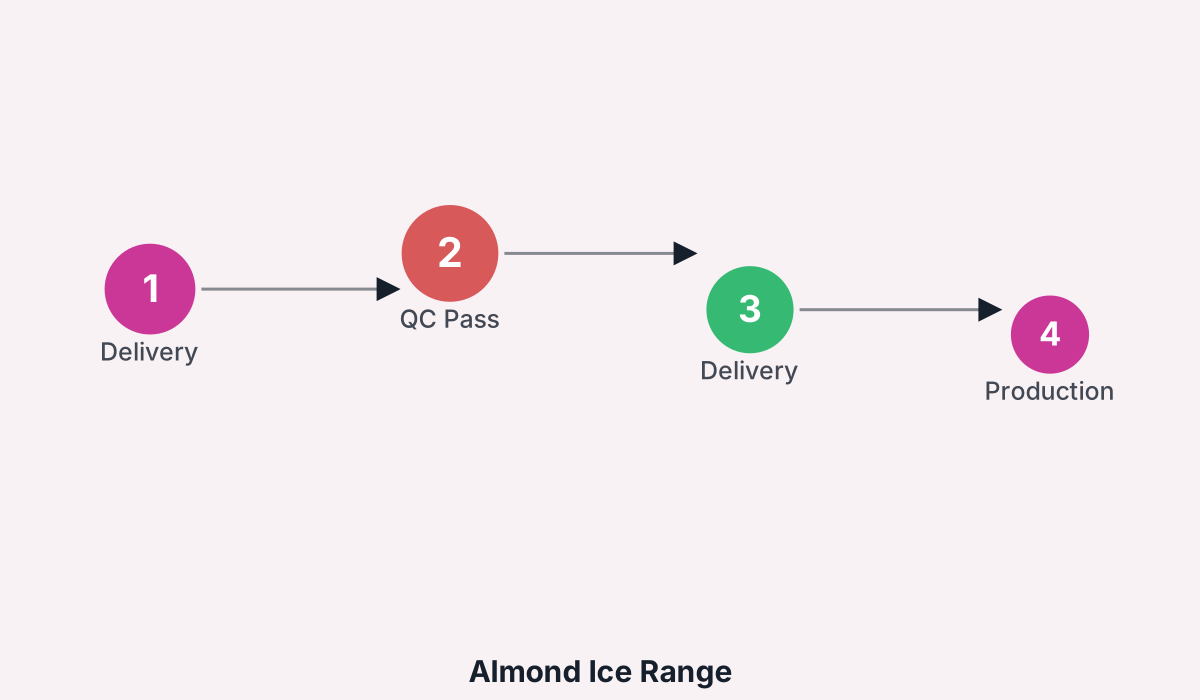
Logistics That Protect Margin
Track almond ice landed cost per unit as a running number, including duty and local delivery. It is the only figure that tells you whether a supplier change actually improved anything.
Consolidating almond ice with other lines is often the biggest single saving available to a mid size importer. The unit cost does not change but the landed cost does, sometimes materially.
Pricing and Margin
Compare almond ice quotes on the same incoterm. A price that looks better because it excludes a cost you assumed was included is not a saving at all.
Indicative reference points for planning purposes: entry tier from USD 1.69 per unit at 2000 units, mid tier at USD 1.48, and volume tier at USD 0.55 for full container quantities. These figures move with specification, packaging and freight, so treat them as a shape rather than a quote.
What to Fix Before Approving Almond Ice
When we write a almond ice specification with a distributor, we fix four things first: the resistance band, the liquid capacity tolerance, the puff count methodology and the packaging master carton. Everything else can flex without changing the customer experience.
Ask any factory for the same almond ice sample twice, three months apart. If the second sample drifts, the production line is running without statistical control and your reviews will drift with it. Consistency over time is a more useful signal than a single good sample.
| Product category | Refillable kit |
|---|---|
| Resistance band | 1.0 - 1.2 ohm |
| Capacity tolerance | +/- 5% |
| Puff count method | Declared by capacity |
| Master carton | 400 units |
| Carton weight | 9.4 kg |
| Shelf life | 12 months |
| Storage | 15-25 C, dry, away from direct light |
How Almond Ice Batches Are Checked
The cheapest quality control step is a retained sample. Keeping three sealed units from every almond ice batch costs almost nothing and turns any dispute into a simple comparison instead of an argument over photographs.
- Check carton dimensions against your freight quote before confirming.
- Ask how the factory measures puff count, then compare like with like.
- Rotate stock by batch code rather than by delivery date.
- Plan the switch from air to sea freight before you need it.
- Start with a mixed carton and let your own sell-through decide.
Turning Almond Ice Into Repeats
Keep the almond ice range tidy. A half empty shelf reads as a dying line, and customers interpret it that way faster than any signage can correct.
How Almond Ice Fits the Assortment
Category planning for almond ice works best when you map it against three shopper types: the restocker who already knows what they want, the switcher who wants something stronger, and the explorer who buys on flavour name alone.
One useful exercise: list every almond ice line you stock and mark the last date each one sold at full price. Anything without a recent full price sale is taking space from something that would use it better.
Practical Checklist
- Rotate stock by batch code rather than by delivery date.
- Model landed cost, not ex-works price, when comparing quotes.
- Write the complaint threshold into the order terms.
- Check carton dimensions against your freight quote before confirming.
- Ask how the factory measures puff count, then compare like with like.
- Keep sealed retained samples from every production batch.
Frequently Asked Questions
What if a batch does not match the sample?
Keep the retained samples from the approval stage. If a delivered batch measurably differs, we compare against the retained set and resolve it against the production record. This is why we insist on sealed retained units from every run.
Can I mix strengths in one order?
In most cases yes, as long as each strength meets the minimum run length. Mixed strength cartons are popular with retailers building their first display because they show the full ladder without over committing.
Can you match an existing product I already sell?
Often yes, provided we can measure it properly. Send a physical sample and we will report back on what can be matched, what will differ slightly, and why. An honest gap is more useful than a vague promise.
What is the usual minimum order for almond ice?
For a standard production run the minimum is normally one master carton per flavour, though mixed cartons can be arranged for a first order. If you are testing the line, ask about a sample pack first and treat the freight as part of your research budget.
How are price changes handled on repeat orders?
{K} pricing is reviewed against input costs and volume rather than adjusted casually. Any change is confirmed in writing before the next order is scheduled, with the reason stated so you can judge it yourself.
Next Step
If you take one thing from this page, take the retained sample habit. It costs a few units per batch and it is the difference between a disagreement and a decision.
Related Reading
- Almond Ice Monthly Review Ritual for Buyers — Cash-and-Carry Formats
- Where Almond Ice Fits in a Balanced Vape Assortment — UK and Ireland
- Almond Ice Product Testing Laboratories Explained — 2026 Edition
- Almond Ice Age Verification at the Point of Sale — Duty and Tax Worked Out
- Negotiating Almond Ice Contracts With Overseas Factories — Mixed Cabinets
- Almond Ice Slow Moving Stock and Remedial Actions — Low Minimum Quantities